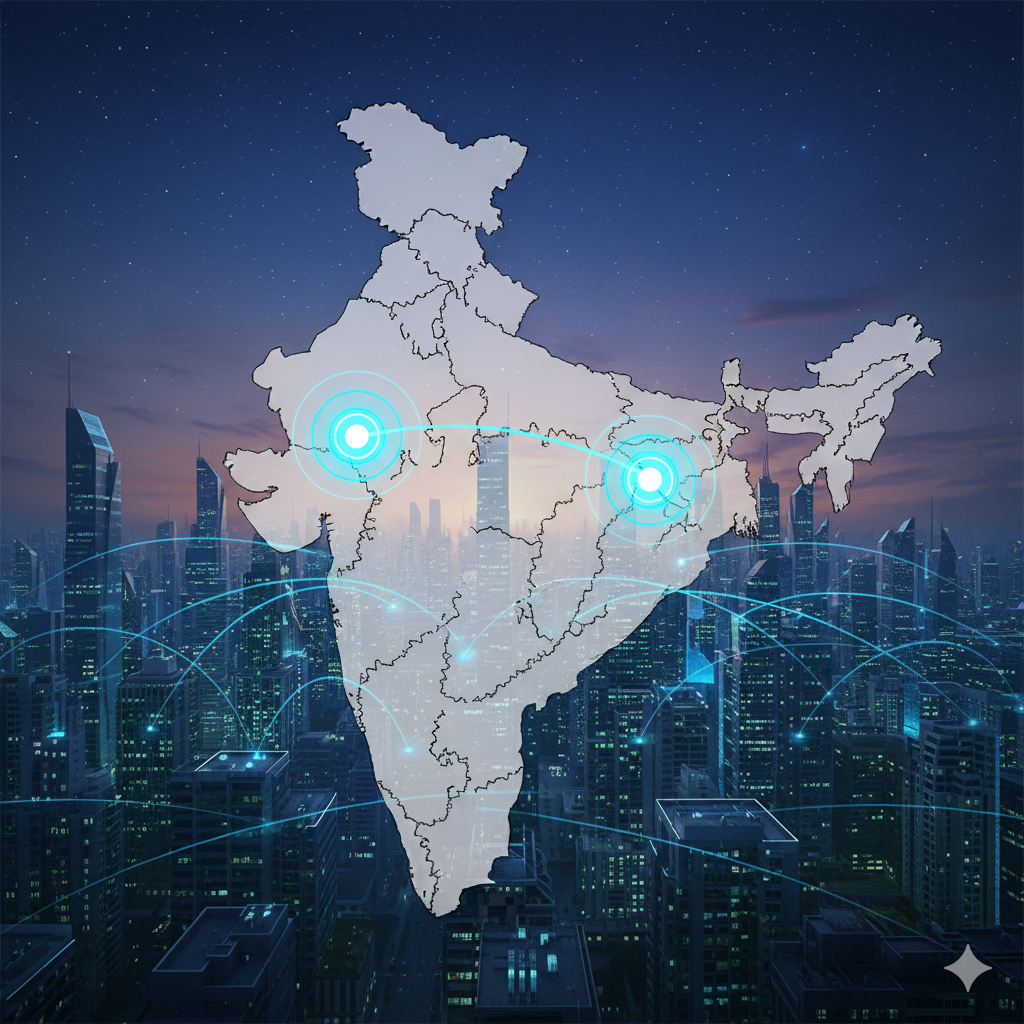
India’s Global Capability Centres (GCCs) are undergoing a fundamental leadership shift. As technology becomes central to global business strategy, companies are increasingly appointing leaders with deep engineering and technology expertise rather than traditional administrative or operations-focused executives. This transition reflects the growing mandate of GCCs as global technology and innovation hubs.
From Support Centres to Technology Powerhouses
Historically, GCCs in India focused on cost efficiency, execution, and operational support. Today, their role has expanded significantly. GCCs are now responsible for delivering business-critical outcomes across artificial intelligence, cloud computing, cybersecurity, data platforms, and emerging technologies.
Leadership expectations have moved beyond managing local operations to owning global technology outcomes, product roadmaps, and IP creation.
Engineering-First Leadership Takes Centre Stage
Companies are prioritising site leaders with strong engineering backgrounds who can:
- Drive AI-led transformation
- Own global product and platform mandates
- Make architecture and technology decisions with business impact
- Align closely with headquarters on innovation priorities
GCC leaders now spend nearly 80% of their time operating in global functional roles, with only about 20% focused on traditional site responsibilities such as branding or ecosystem engagement. This marks a sharp break from the past, when site heads were largely administrative leaders.
Rapid Leadership Transitions Reflect Higher Expectations
The pace of leadership change has accelerated. Over the last year, more than two dozen senior GCC leadership appointments were made in India. Boards and global headquarters are demonstrating less patience for slow transformation cycles.
If GCC leaders are unable to articulate and deliver AI-driven or technology-led operating models within 6–12 months, companies are quicker to reset leadership compared to previous years.
Notable GCC Leadership Appointments in India (2025)
Several high-profile appointments underscore this trend:
- Pradeep Menon – Country Head & MD, Charles Schwab India
- Satya Prakash Ranjan – Country Head & Head of Technology, First Citizens India
- Prashanti Bodugum – Head, Evernorth Health Services India
- Mouha Sengupta – SVP & Country Head (India), The Standard
- Sunil Gopinath – CEO, Albertsons India
- Prashobh Chandralayam – Global GCC Leader, Kyndryl
- Aneelkumar Savalagi – Global Chapter Leader (Innovation Capability Centre), Takeda
- Lalit Kumar – CEO, ArcelorMittal Global Business & Technologies
- Raju Chiluvuri – Head of Technology & Operations, Arch Global Services India
These leaders bring deep domain expertise and are expected to act as strategic partners embedded in enterprise priorities.
GCCs Measured by Impact, Not Cost
GCCs are no longer evaluated as cost centres. Increasingly, they are measured as:
- Product and platform engines
- IP creation hubs
- Global engineering road-map owners
Automation is taking over routine execution, pushing leadership to focus on engineering judgment, product ownership, and long-term architectural decisions.
India’s Talent Advantage Strengthens
With a mature GCC ecosystem and a strong bench of experienced leaders, companies believe leadership risk is lower. This confidence enables faster leadership upgrades and accelerates transformation momentum across centres.
India’s ability to combine strategic thinking, business insight, and execution excellence continues to make it the preferred destination for global technology leadership roles.
Conclusion
The rise of engineering-first leaders signals a decisive shift in how GCCs are perceived and governed. As global enterprises embed more critical mandates in India, GCC leaders are no longer just site heads — they are global technology owners shaping enterprise-wide outcomes.
This evolution firmly positions India’s GCCs as core drivers of innovation, resilience, and competitive advantage.
Visit Our News section and follow us on LinkedIn and Twitter
Read more full news: Here